
Bedouin Life in Wadi Rum
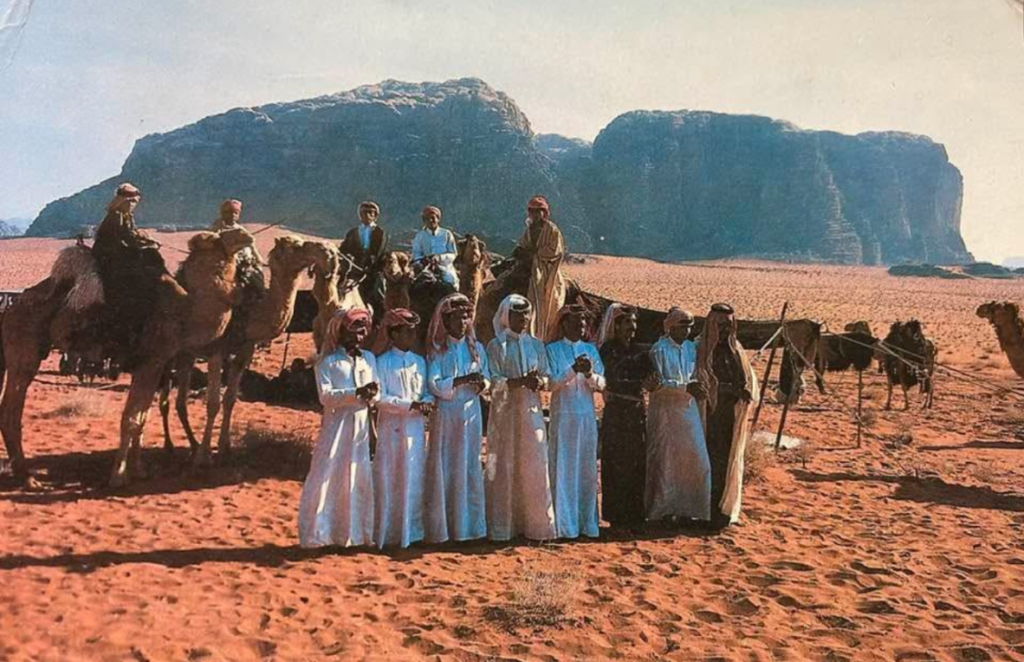
For centuries, Bedouin families have lived in the desert of Wadi Rum, creating a unique culture shaped by the landscape of sandstone mountains, wide valleys, and endless red sand. Life in the desert required strong knowledge of nature, patience, and the ability to travel across large distances in a harsh but beautiful environment.
The Bedouins who live in Wadi Rum today belong mainly to the Zalabieh tribe, a local community that has lived in the area for generations. Over time, they developed a deep understanding of the desert and its hidden paths, water sources, and natural landmarks.
In the past, Bedouin life in Wadi Rum was based on movement and simplicity. Families traveled through the desert with camels and goats, setting up tents in different locations depending on the season. Their lifestyle was closely connected to nature and the rhythm of the desert.
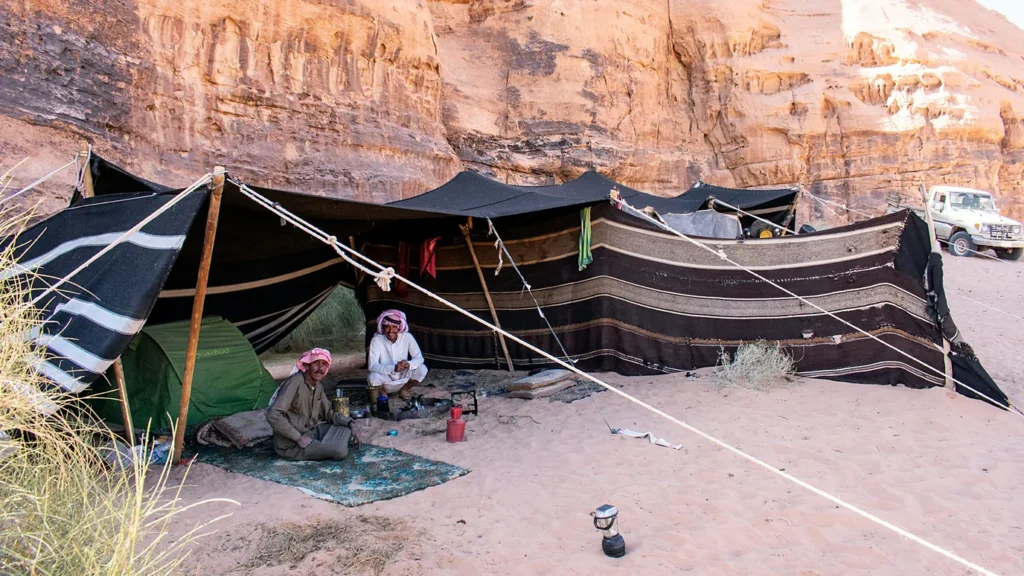
One of the most important parts of traditional Bedouin life was the Bedouin tent, known in Arabic as Beit Al-Sha’ar, which means “house of hair.” These tents were made from woven goat hair and sheep wool. The material was strong and practical for desert life, protecting families from the intense sun during the day while also keeping warmth inside during cold desert nights.
The Bedouin tent was not only a place to sleep but also the center of daily life. Families gathered inside the tent to eat, drink tea, and share stories. A special part of the tent was used for welcoming guests, reflecting the deep tradition of Bedouin hospitality.
Bedouin life in the desert also changed with the seasons. During the hot summer months, families often stayed in places where there was more shade and open space to catch the desert breeze. In winter, they usually moved their tents to areas near mountains or hills that could protect them from strong winds and rain. Choosing the right place to camp was very important for comfort and safety during the colder months.
Hospitality has always been one of the most important parts of Bedouin culture. Welcoming guests is a strong tradition in the desert. Visitors are often greeted with traditional Bedouin tea or coffee, and it is common to share food, stories, and conversation around the fire.
Food also plays an important role in Bedouin traditions. One of the most famous dishes is Zarb, a traditional Bedouin barbecue cooked underground in the desert sand. Meat and vegetables are slowly cooked over hot coals buried beneath the sand, creating a delicious meal that is often shared with guests visiting the desert camps.
The desert of Wadi Rum is not only beautiful but also rich in history. Ancient inscriptions and rock carvings can be found in many places across the desert, showing that people have traveled through this area for thousands of years. Bedouin guides in Wadi Rum know these places well and often include them during desert tours.
Today, tourism has become an important part of life in Wadi Rum. Many local Bedouins work as guides, drivers, and hosts in desert camps. They organize jeep tours, camel rides, hiking trips, and overnight stays under the stars, giving visitors the chance to experience the peaceful beauty of the desert.
Travelers from around the world come to Wadi Rum not only to see the famous landscapes but also to experience the culture and hospitality of the local Bedouin people. Sitting around the fire, drinking tea, and listening to stories about the desert is often one of the most memorable parts of a visit.
Although life has changed with modern tourism, the traditions of Bedouin culture in Wadi Rum remain strong. Respect for the desert, generosity toward guests, and a close connection with family and community continue to define life in this extraordinary desert.