
Bedouin Tent – Beit Al-Sha’ar
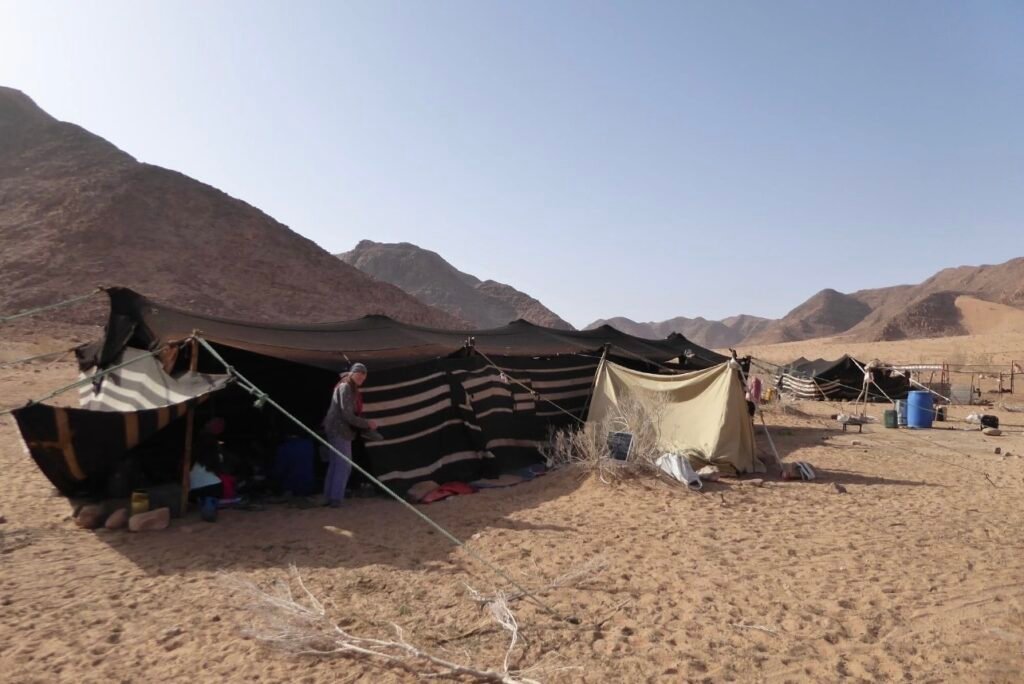
For many generations, the traditional Bedouin tent, known as Beit Al-Sha’ar, has been an essential part of life for Bedouins living in the desert of Wadi Rum. The name Beit Al-Sha’ar means “house of hair,” because the tent was traditionally made from the hair of goats.
In the past, Bedouin women would collect and weave goat hair to create strong fabric used to build the tent. This material was very suitable for desert life and helped families live comfortably in the harsh conditions of the desert.
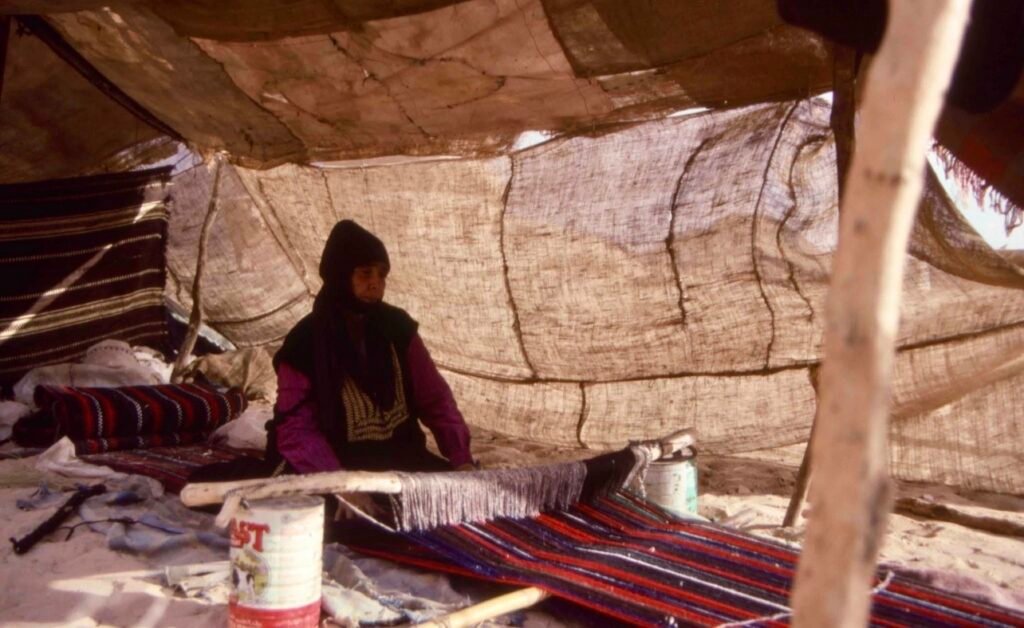
One of the most unique qualities of Beit Al-Sha’ar is how it reacts to different weather conditions. During the summer, the woven goat hair slightly expands, allowing small openings in the fabric that let fresh air pass through the tent. This helped cool the inside of the tent and made it more comfortable during the intense desert heat.
In the winter, the situation changes. When rain falls on the tent, the goat hair fibers tighten and press together. This natural reaction makes the fabric stronger and helps prevent rainwater from entering the tent, keeping the family dry inside.
Because of these natural qualities, Beit Al-Sha’ar was perfectly designed for desert life. It protected families from the sun, wind, and rain while still allowing them to live comfortably in the open desert.

Even today, the traditional Bedouin tent remains an important symbol of Bedouin culture in Wadi Rum, and visitors can still see these tents in desert camps where they experience traditional Bedouin hospitality, tea, and meals under the vast desert sky. Even today, we still use this traditional method outside our tents in the desert camps to create shaded areas where guests can relax and enjoy the desert atmosphere.