
Wadi Rum Khazali Canyon
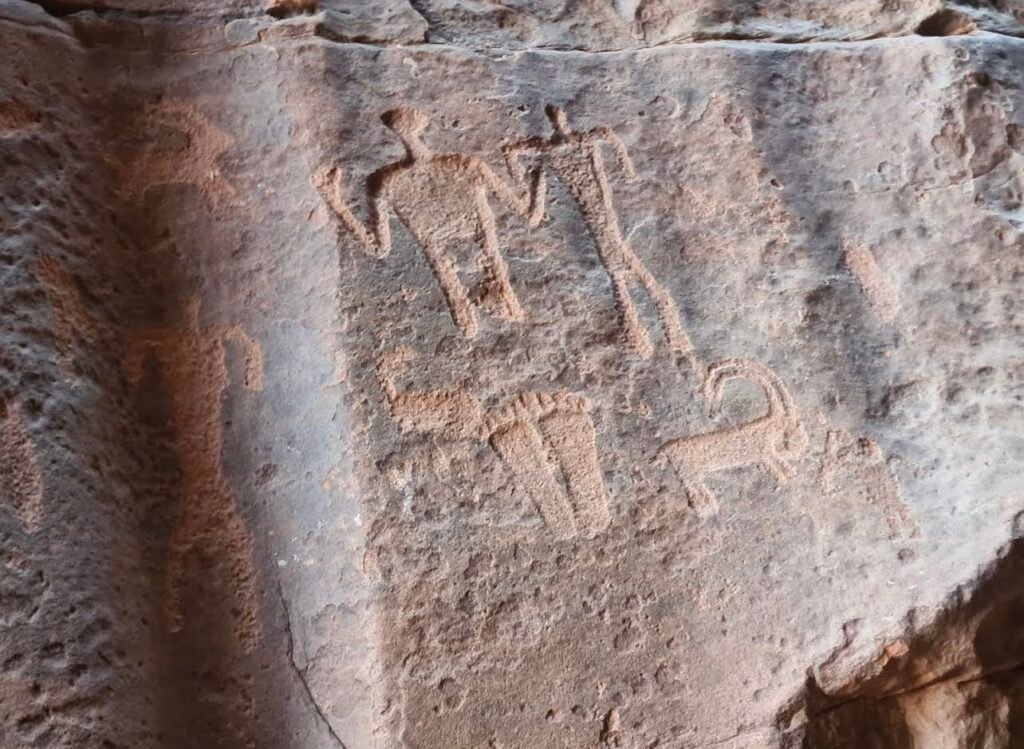
Khazali Canyon is one of the most famous natural and historical attractions in Wadi Rum. This narrow canyon lies between high sandstone mountains and is known for its ancient rock inscriptions carved into the canyon walls many centuries ago.
The canyon was naturally formed by wind and water erosion over thousands of years, creating a narrow passage through the red sandstone mountains. When visitors walk inside the canyon, they can see the impressive rock walls rising high above them, creating a unique and dramatic desert landscape.
What makes Khazali Canyon especially important is the large number of ancient carvings found on its rock walls. These inscriptions were left by travelers, traders, and Bedouin tribes who passed through the Wadi Rum desert long ago.
Among the carvings, visitors can see Thamudic inscriptions, which date back many centuries and are considered some of the oldest writings in the region. These inscriptions often include names, symbols, and drawings of animals.
The canyon also contains Kufic script, one of the earliest forms of Arabic writing used during the early Islamic period. In addition, visitors can find Islamic inscriptions carved into the rocks by travelers who passed through the area during different historical periods.
These carvings give visitors a glimpse into the long history of human activity in the Wadi Rum desert and show how the canyon served as a passage for people crossing the region for trade, travel, and migration.
Today, Khazali Canyon is one of the most popular stops during Wadi Rum jeep tours. Visitors can walk a short distance inside the canyon to explore the inscriptions and enjoy the peaceful atmosphere of the desert.
The canyon is located about 7 kilometers from Wadi Rum Village, and it usually takes around 10–15 minutes by jeep to reach the site.
Because of its natural beauty and historical importance, Khazali Canyon remains one of the must-see places in Wadi Rum and an essential stop on most desert tours.
